
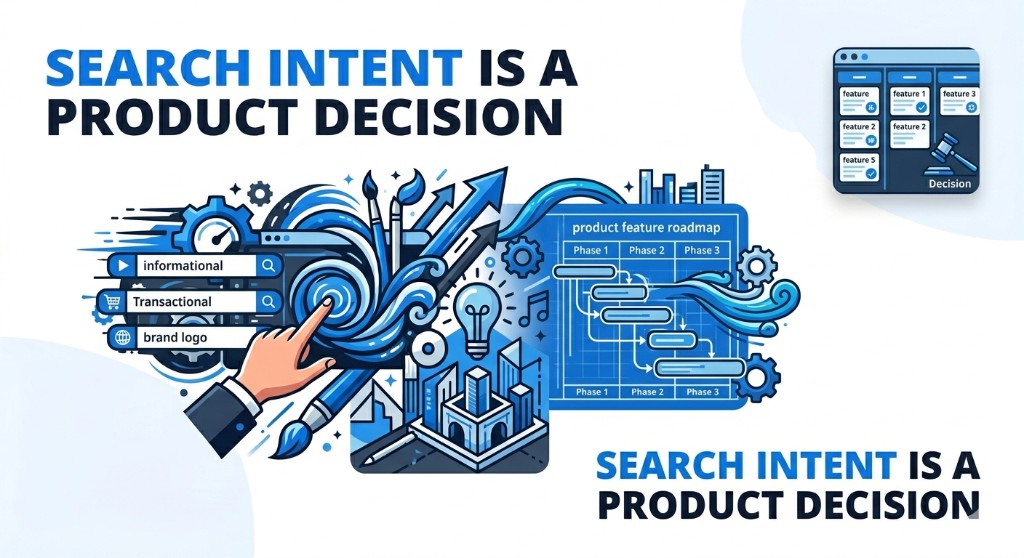
Design content around user decisions, not keywords alone
Most SEO plans fail at conversion because they optimize for discovery while ignoring what users need next. Intent mapping solves this by linking query patterns to decision stages.
Begin with query clusters, but do not stop there. For each cluster, define the user’s job-to-be-done: learn, compare, validate, or buy. This determines page type, copy depth, and conversion path far better than search volume by itself.
Informational intent pages should build confidence quickly with examples, frameworks, and lightweight proof. Comparison intent needs transparent trade-offs and clear differentiation. Transactional intent requires frictionless next steps: pricing clarity, FAQs, and obvious contact or checkout paths.
Internal linking should mirror real decision behavior. If a reader lands on an explainer page, route them to relevant proof assets and practical implementation guides before asking for contact. This keeps momentum without forcing a premature conversion.
Measure quality signals that indicate intent satisfaction: engaged time, meaningful scroll depth, assisted conversions, and return visits to high-intent pages. Ranking movement is helpful, but these metrics reveal whether the page is actually doing its job.
Teams that treat SEO pages as product surfaces produce better outcomes. They ship clearer experiences, reduce bounce from mismatch, and convert organic traffic into real business progress over time.